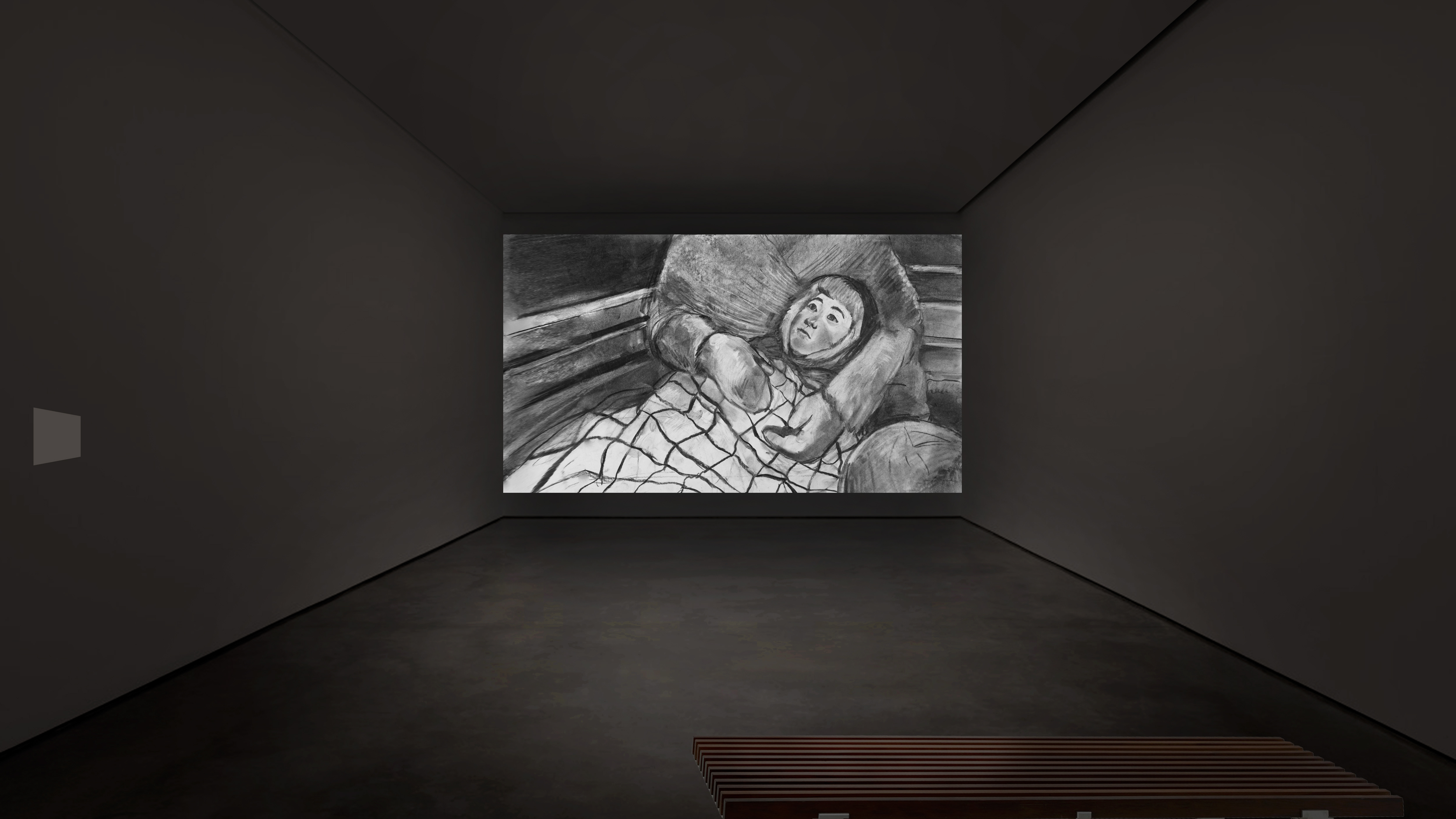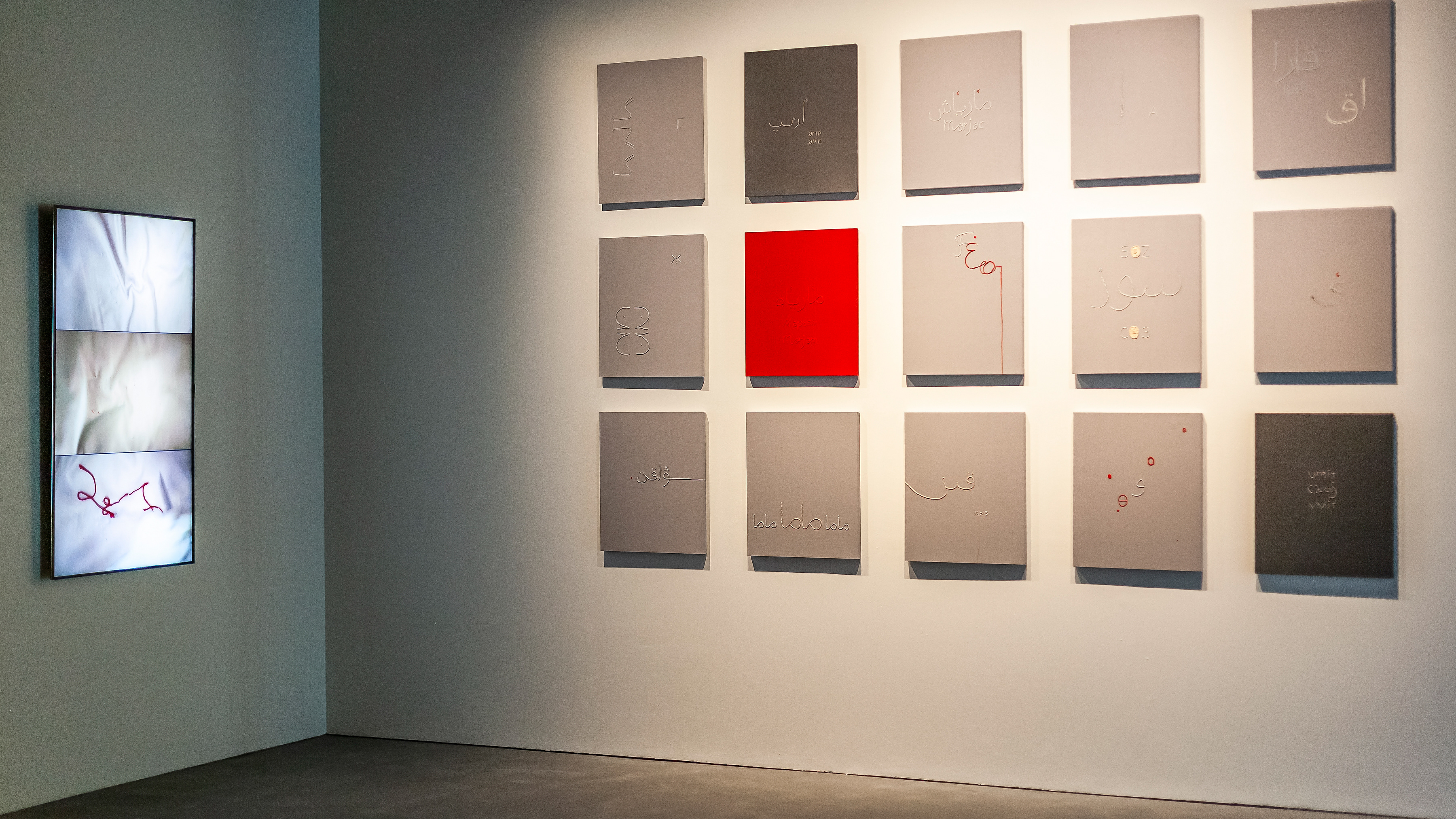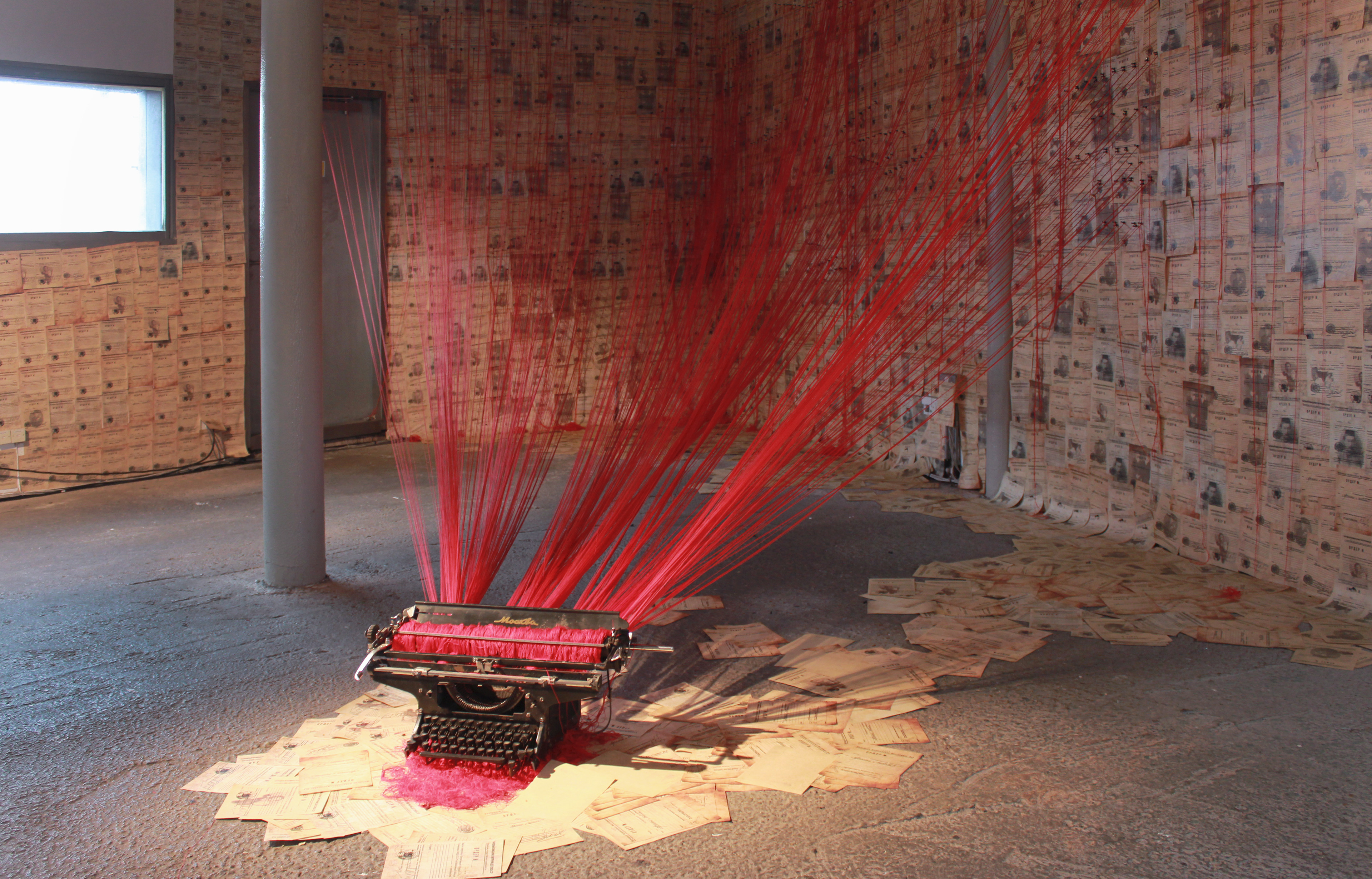
Image: Machine (reiteration of the original work) exhibited at Focus Kazakhstan: Postnomadic Mind, Wapping Project, London, UK (2018)
The work commemorates victims of the Great Terror in Kazakhstan in 1937-38. It features an old typewriter and about one thousand redacted arrest warrants with erased data. As a reference to the bureaucratic nature of terror, the work explores the narrative that such was the system, posing questions of individual participation in acts of violence.
As a commemorative work, it explores the concept of mourning. The piece draws upon the Kazakh word for mourning, "joqtau", in the root of which is "joq" that signifies absence or negation. Mourning is a way of recognising absence, and with this piece, I seek to give a tangible, material presence to the collective loss.
The work was first made for the exhibition 1937 | Joqtau: Territory of Memory at the Kazakh State Museum of Fine Arts in Almaty in 2013. The exhibition was also shown in the Nevzorovs' Museum of Arts in Semey, Kazakhstan (2014), the National Museum of Arts in Astana (2014), among others.
The installation was also included in the shows such as, Reconciliation: Memory of the Steppes at Algabas Centre for Contemporary Art within Artbat Fest, Almaty, Kazakhstan (2017), and Postnomadic Mind, within Focus Kazakhstan Project in London (2018)
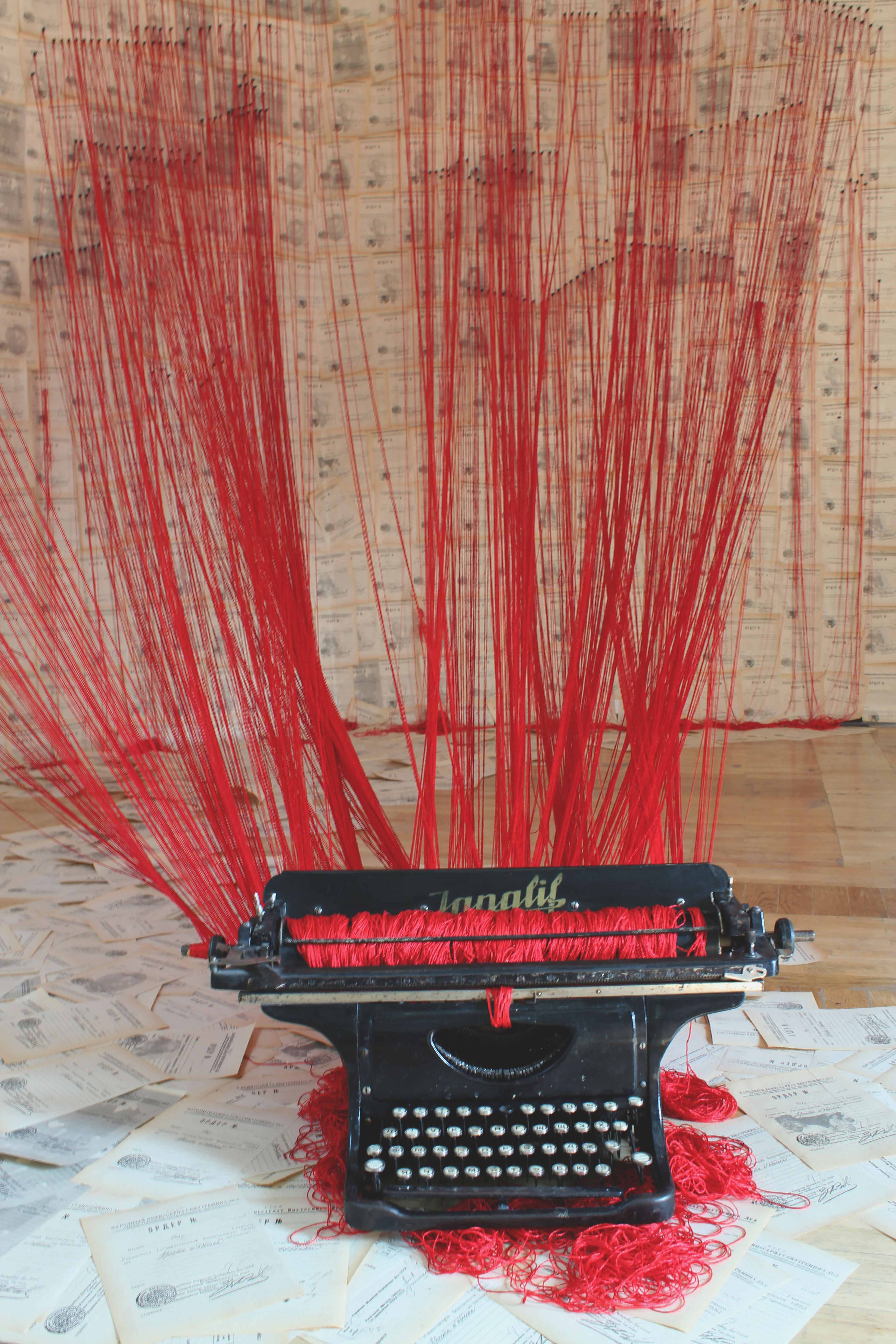
Machine, installation detail, 2013
Kazakh State Museum of Fine Arts
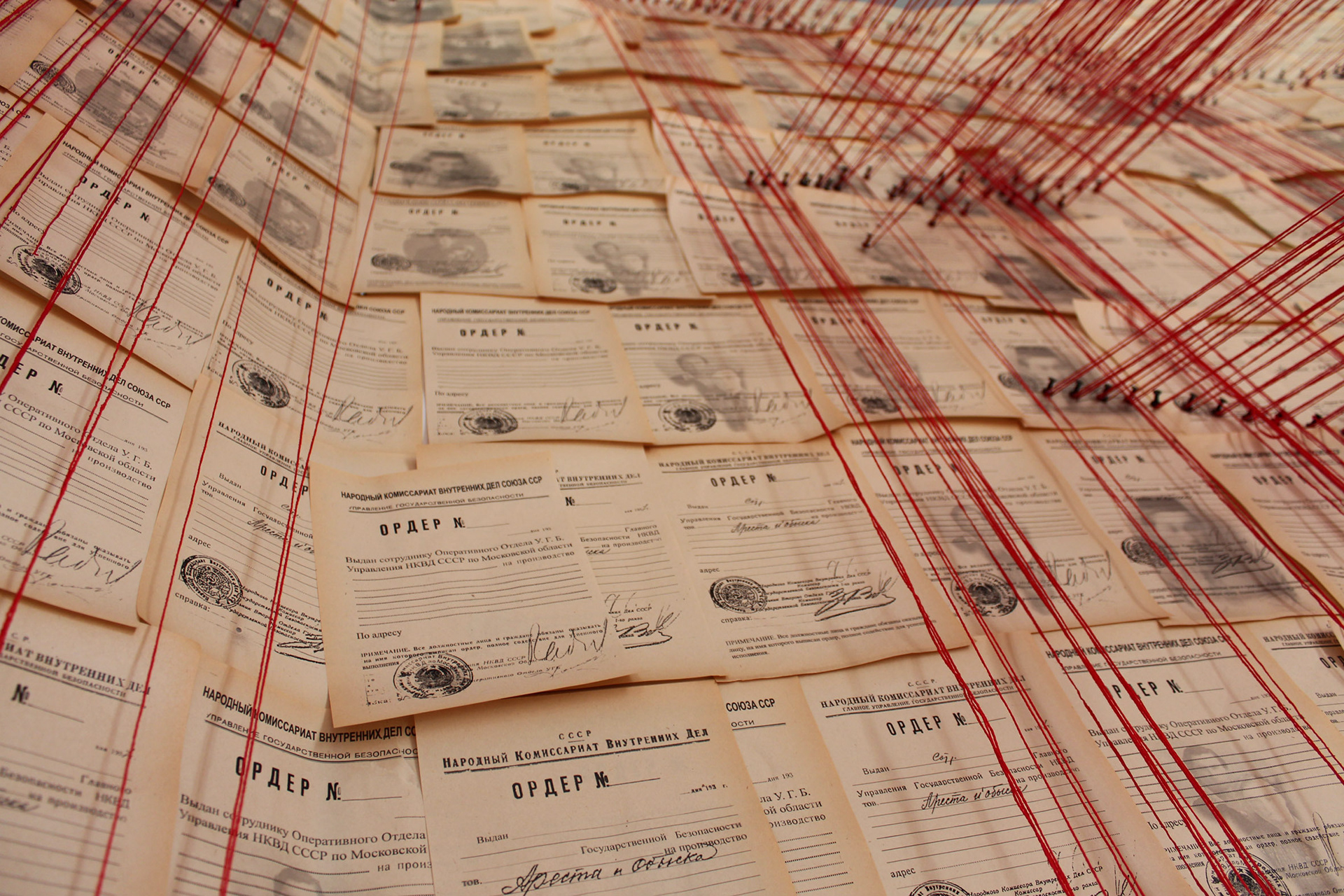
Installation detail, Kazakh State Museum of Fine Arts, 2013
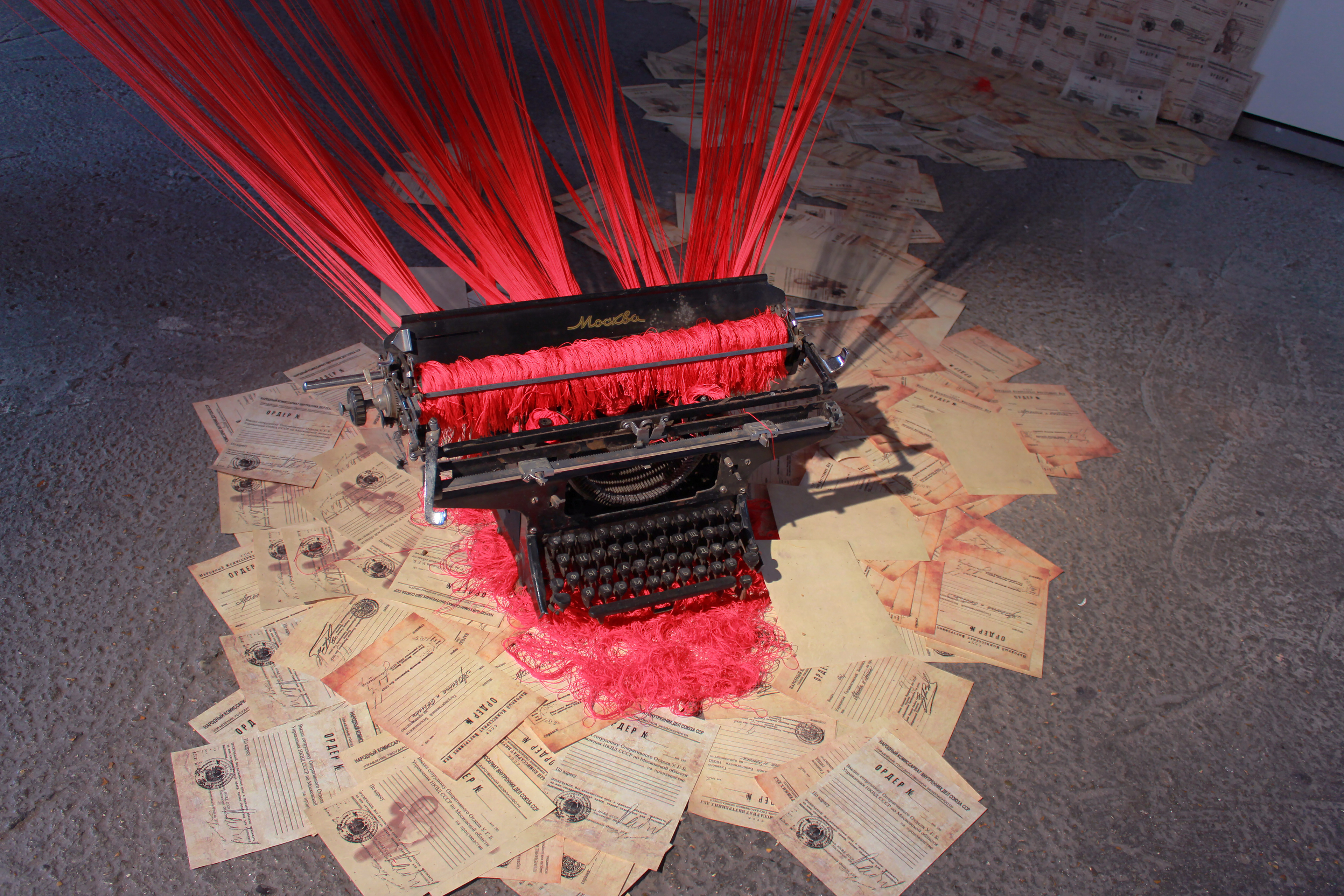
Installation detail, Machine (reiteration), Wapping Project, London, 2018